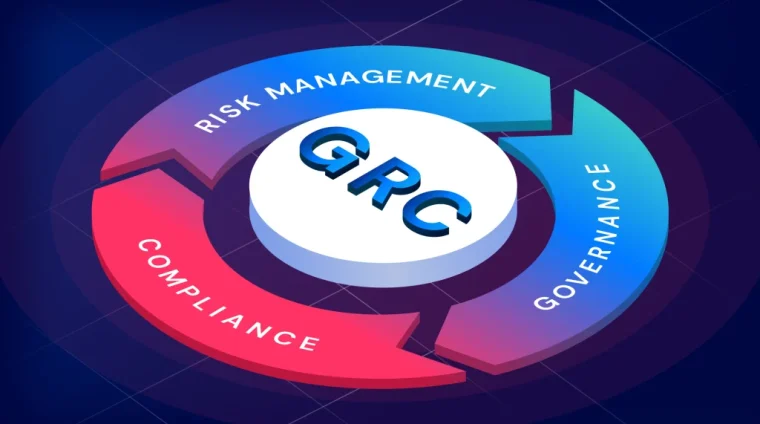
This course equips participants with the knowledge and practical skills required to design, implement, and manage Governance, Risk, and Compliance (GRC) frameworks within organizations. It focuses on corporate governance structures, enterprise risk management, regulatory compliance, internal controls, audit processes, and information security governance. Participants will learn how to align business objectives with risk and compliance requirements to ensure operational resilience and regulatory adherence.
Target Groups
- Risk and compliance officers
- Internal and external auditors
- IT and cybersecurity managers
- Governance and legal professionals
- Chief Information Security Officers (CISOs)
- Business executives and managers
- Financial and operational risk analysts
- Students pursuing business, law, or information security
Course Objectives
By the end of this course, participants will be able to:
- Understand principles of Governance, Risk, and Compliance
- Develop and implement GRC frameworks
- Identify and assess organizational risks
- Design internal control systems
- Ensure regulatory and policy compliance
- Integrate risk management into business processes
- Support audit and assurance processes
- Improve organizational accountability and governance
- Use GRC tools and systems effectively
- Strengthen decision-making through risk-based approaches
Course Modules
Module 1: Introduction to GRC
- Definition and scope of GRC
- Importance of governance, risk, and compliance
- Relationship between GRC components
- Evolution of GRC frameworks
- Overview of enterprise GRC strategy
Module 2: Corporate Governance Principles
- Governance structures and frameworks
- Roles and responsibilities in governance
- Board and executive oversight
- Ethical leadership and accountability
- Corporate governance best practices
Module 3: Enterprise Risk Management (ERM)
- Risk management fundamentals
- Risk identification and classification
- Risk assessment and evaluation
- Risk response strategies
- Risk monitoring and reporting
Module 4: Regulatory Compliance Management
- Overview of regulatory environments
- Compliance requirements and standards
- Policy development and enforcement
- Compliance monitoring systems
- Handling non-compliance issues
Module 5: Internal Controls and Assurance
- Internal control frameworks
- Control design and implementation
- Preventive, detective, and corrective controls
- Control testing and evaluation
- Assurance and audit integration
Module 6: Information Security and IT Governance
- IT governance frameworks
- Cybersecurity risk governance
- Data protection and privacy compliance
- Access control and security policies
- Alignment of IT with business objectives
Module 7: Audit and Compliance Processes
- Internal and external audit functions
- Audit planning and execution
- Evidence collection and documentation
- Compliance reporting and review
- Audit findings and remediation
Module 8: Risk Assessment Tools and Techniques
- Risk matrices and scoring models
- Qualitative and quantitative risk analysis
- Key risk indicators (KRIs)
- Scenario and impact analysis
- Risk reporting dashboards
Module 9: GRC Systems and Technology
- Overview of GRC software solutions
- Automation of compliance processes
- Data integration and reporting tools
- Continuous monitoring systems
- Digital transformation in GRC
Module 10: Capstone Project and Case Studies
- Real-world GRC implementation scenarios
- Group project: designing a GRC framework
- Risk assessment and compliance mapping exercise
- Case study review of governance failures and successes
- Emerging trends in GRC, AI-driven compliance, and regulatory technology (RegTech)