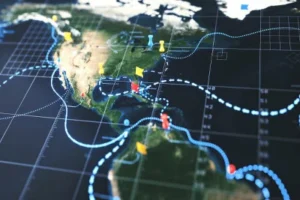
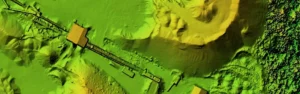
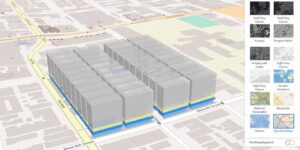
This course equips participants with the knowledge and skills to use Geographic Information Systems (GIS) for analyzing, modeling, and visualizing climate change impacts. It covers the integration of spatial data, climate datasets, and GIS tools to study climate variability, extreme events, vulnerability assessments, and adaptation planning. Participants will engage in hands-on exercises using GIS software to interpret climate models, assess risks, and develop evidence-based strategies for climate resilience.
Target Groups
- Climate change analysts and researchers
- Environmental scientists and ecologists
- Policy makers and climate adaptation planners
- Disaster risk management professionals
- Urban and regional planners
- NGO and development practitioners
- Students in environmental studies, geography, or climate science
Course Objectives
By the end of this course, participants will be able to:
- Understand the role of GIS in climate change monitoring and analysis.
- Access and integrate climate data (temperature, precipitation, sea level rise, etc.) with GIS.
- Analyze spatial and temporal patterns of climate change.
- Conduct vulnerability and risk assessments for ecosystems and communities.
- Apply GIS tools to model climate change impacts on land use, water resources, and biodiversity.
- Develop maps and visualizations to support climate adaptation and mitigation strategies.
- Communicate climate change insights effectively to decision-makers and stakeholders.
Course Modules
Module 1: Introduction to GIS & Climate Change
- Overview of climate change science
- Importance of spatial data in climate studies
- GIS concepts and applications in climate research
- Global frameworks for climate monitoring (IPCC, UNFCCC)
Module 2: Climate Data Sources & Integration
- Global and regional climate datasets (e.g., CMIP6, NASA, NOAA)
- Remote sensing data for climate analysis
- Data formats: raster, vector, NetCDF, HDF
- Integrating climate and socio-economic data in GIS
Module 3: Spatial Analysis of Climate Variability
- Temperature and precipitation trend mapping
- Analyzing extreme events (heatwaves, droughts, floods)
- Spatial interpolation and time-series analysis
- Climate anomaly detection
Module 4: GIS for Vulnerability & Risk Assessments
- Concepts of exposure, sensitivity, and adaptive capacity
- Vulnerability mapping for communities and ecosystems
- Multi-criteria analysis (MCA) in GIS
- Climate risk indices and hotspot identification
Module 5: Modeling Climate Change Impacts
- Land use and land cover change projections
- Sea level rise and coastal flooding analysis
- Water resources and hydrological modeling
- Biodiversity and habitat loss assessments
Module 6: GIS in Climate Adaptation & Mitigation
- Spatial planning for climate adaptation
- Renewable energy potential mapping (solar, wind)
- Carbon sequestration and forest monitoring
- Policy and decision-support using GIS
Module 7: Visualization & Communication of Climate Data
- Designing effective climate maps and dashboards
- Story maps for communicating climate impacts
- Web GIS for climate data sharing
- Case studies and real-world applications
Module 8: Practical Hands-On Sessions
- Working with climate datasets in GIS software (QGIS, ArcGIS)
- Time-series analysis of temperature and rainfall trends
- Vulnerability mapping and risk assessment exercises
- Modeling future scenarios using open-source data
Module 9: Future Trends in GIS & Climate Change Research
- Big data and cloud-based GIS for climate analysis
- Machine learning for climate pattern recognition
- Integration of IoT and sensor networks in climate monitoring
- Collaborative platforms for climate action