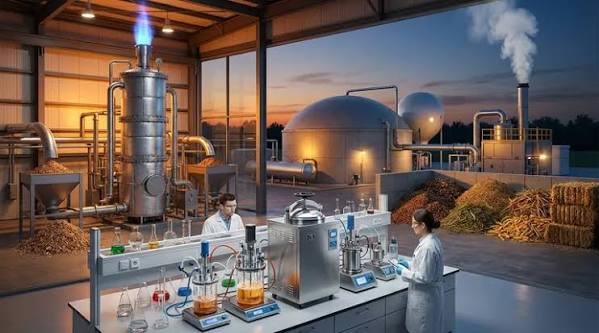
This course equips participants with practical knowledge of bioenergy resources and biomass conversion technologies. It focuses on biomass feedstocks, combustion, gasification, biogas, biofuels, system design basics, economics, sustainability, and project development.
Target Groups
- Renewable energy engineers and technicians
- Energy planners and policy officers
- Agricultural and agro-processing managers
- Project developers and investors
- NGO and community energy practitioners
- Researchers and students in energy
- Managers and supervisors seeking to strengthen organizational practice in this field
- Consultants and professionals supporting related organizations
Course Objectives
By the end of this course, participants will be able to:
- Explain the role of bioenergy in the energy transition
- Identify and assess biomass resources and feedstocks
- Describe thermochemical conversion technologies such as combustion, gasification, and pyrolysis
- Describe biochemical conversion such as anaerobic digestion and fermentation
- Understand biogas and biofuel production systems
- Evaluate technology selection and basic system design
- Assess project economics and financing
- Assess environmental, social, and sustainability impacts
- Understand policy, standards, and safety requirements
- Plan and develop a bioenergy project
Course Modules
Module 1: Introduction to Bioenergy
- Bioenergy in the energy mix
- Biomass types and sources
- Energy conversion pathways
- Global and regional trends
- Benefits and constraints
Module 2: Biomass Resource Assessment
- Feedstock types and properties
- Residues, energy crops, and waste
- Resource quantification
- Supply chains and logistics
- Feedstock quality
Module 3: Biomass Preparation and Combustion
- Drying and size reduction
- Pelletizing and briquetting
- Combustion principles
- Boilers and stoves
- Emissions control
Module 4: Gasification and Pyrolysis
- Gasification principles
- Gasifier types
- Producer gas use
- Pyrolysis and biochar
- Process safety
Module 5: Anaerobic Digestion and Biogas
- Biogas production process
- Digester types
- Feedstocks and operation
- Biogas cleaning and use
- Digestate management
Module 6: Liquid Biofuels
- Bioethanol and biodiesel
- Production processes
- Feedstocks
- Fuel standards
- Advanced biofuels overview
Module 7: System Design, Heat, and Power Applications
- Sizing basics
- Combined heat and power
- Rural and industrial applications
- Integration with existing systems
- Operation and maintenance
Module 8: Economics, Financing, and Business Models
- Capital and operating costs
- Levelized cost of energy
- Financing options
- Revenue and carbon credits
- Business models
Module 9: Sustainability, Policy, and Safety
- Greenhouse gas balance
- Land use and food security
- Environmental and social safeguards
- Policy incentives
- Health and safety
Module 10: Practical Exercises and Capstone Project
- Assessing biomass resources for a case site
- Selecting a conversion technology
- Estimating a basic energy yield and costs
- Developing a project concept
- Presenting a bioenergy project proposal