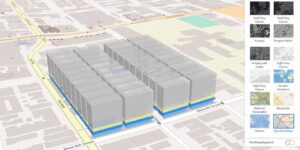
This course equips participants with the knowledge and practical skills required to analyze spatial data for environmental applications using Geographic Information Systems (GIS), remote sensing, and statistical methods. It focuses on environmental change detection, ecosystem analysis, pollution mapping, climate impact assessment, and spatial modeling. Participants will learn how to transform geospatial data into meaningful environmental insights for research, planning, and decision-making.
Target Groups
- Environmental scientists and ecologists
- GIS analysts and geospatial technicians
- Climate change researchers
- Urban and regional planners
- Natural resource and conservation officers
- Government environmental agencies
- NGO and sustainability practitioners
- Students pursuing environmental science, geography, or GIS
Course Objectives
By the end of this course, participants will be able to:
- Understand principles of spatial data analysis in environmental studies
- Use GIS tools for environmental data analysis
- Analyze land use and land cover changes
- Assess environmental degradation and risks
- Apply spatial statistics to environmental datasets
- Conduct ecosystem and habitat analysis
- Integrate remote sensing in environmental studies
- Develop environmental maps and models
- Support environmental decision-making processes
- Communicate spatial environmental findings effectively
Course Modules
Module 1: Introduction to Spatial Data Analysis in Environmental Studies
- Definition and scope of spatial analysis
- Role of GIS in environmental science
- Types of environmental spatial data
- Overview of analytical workflows
- Applications in environmental management
Module 2: Fundamentals of GIS and Spatial Data
- GIS concepts and components
- Vector and raster data structures
- Coordinate systems and projections
- Environmental data sources
- Data quality and preprocessing
Module 3: Remote Sensing for Environmental Analysis
- Satellite imagery and environmental monitoring
- Image classification techniques
- Vegetation and land cover indices
- Change detection methods
- Environmental time-series analysis
Module 4: Land Use and Land Cover Change Analysis
- Land use classification systems
- Drivers of land cover change
- Deforestation and urban expansion analysis
- Temporal change detection
- Environmental impact assessment
Module 5: Spatial Statistics and Analysis Techniques
- Descriptive spatial statistics
- Spatial autocorrelation analysis
- Hotspot and cluster analysis
- Regression analysis in environmental studies
- Pattern recognition in spatial data
Module 6: Ecosystem and Habitat Analysis
- Ecosystem mapping and classification
- Habitat suitability modeling
- Biodiversity assessment techniques
- Conservation prioritization
- Fragmentation and connectivity analysis
Module 7: Pollution and Environmental Risk Mapping
- Air, water, and soil pollution mapping
- Pollution source identification
- Environmental exposure analysis
- Risk assessment methodologies
- Vulnerability mapping techniques
Module 8: Climate Change and Environmental Modeling
- Climate data analysis
- Temperature and rainfall spatial trends
- Climate impact assessment
- Scenario-based environmental modeling
- Adaptation and mitigation analysis
Module 9: GIS Tools for Environmental Studies
- GIS software applications
- Remote sensing and spatial analysis tools
- Data visualization and dashboards
- Mobile GIS for field studies
- Integration of multi-source datasets
Module 10: Capstone Project and Case Studies
- Real-world environmental analysis scenarios
- Group project: environmental spatial analysis study
- Land cover and pollution mapping exercise
- Case study review of environmental changes
- Emerging trends in AI, big data, and geospatial environmental analytics