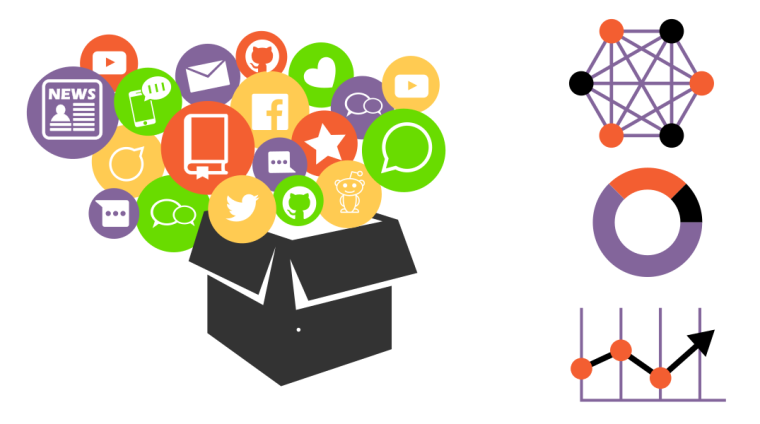
This course equips participants with the knowledge and practical skills required to analyze social media data using Natural Language Processing (NLP) techniques. It focuses on extracting insights from unstructured text data, sentiment analysis, topic modeling, and trend detection. Participants will learn how to monitor brand perception, understand audience behavior, and support marketing and strategic decisions using data-driven social media insights.
Target Groups
- Digital marketing and social media professionals
- Data analysts and business intelligence specialists
- Brand and communications managers
- Customer experience and insights teams
- Researchers and data science practitioners
- Students pursuing data science, marketing, or analytics
Course Objectives
By the end of this course, participants will be able to:
- Understand fundamentals of social media analytics and NLP.
- Collect and preprocess social media data.
- Apply text mining and sentiment analysis techniques.
- Identify trends and topics in social conversations.
- Analyze customer opinions and brand perception.
- Use NLP tools and libraries for analytics.
- Visualize and communicate social media insights.
- Support marketing strategies with data insights.
- Monitor and evaluate campaign performance.
- Apply ethical considerations in data usage and analysis.
Course Modules
Module 1: Introduction to Social Media Analytics & NLP
- Overview of social media analytics
- Importance of NLP in analyzing text data
- Types of social media data
- Applications in marketing and business
- Case studies in social media insights
Module 2: Data Collection & Sources
- Social media platforms and APIs
- Data scraping and extraction techniques
- Structured vs unstructured data
- Data storage and management
- Legal and ethical considerations
Module 3: Text Preprocessing & Cleaning
- Tokenization and normalization
- Removing stop words and noise
- Handling emojis, hashtags, and slang
- Text transformation techniques
- Preparing text data for analysis
Module 4: Sentiment Analysis Techniques
- Introduction to sentiment analysis
- Rule-based vs machine learning approaches
- Polarity classification (positive, negative, neutral)
- Sentiment scoring methods
- Applications in brand monitoring
Module 5: Topic Modeling & Trend Analysis
- Identifying themes and topics in text
- Latent Dirichlet Allocation (LDA) basics
- Trend detection and tracking
- Keyword and hashtag analysis
- Monitoring emerging topics
Module 6: Text Classification & Machine Learning
- Supervised learning for text classification
- Feature extraction techniques (TF-IDF, embeddings)
- Training and evaluating models
- Use cases in spam detection and categorization
- Improving model accuracy
Module 7: Social Network & Engagement Analysis
- Measuring engagement metrics
- Influencer identification
- Network analysis basics
- User behavior analysis
- Campaign performance tracking
Module 8: Visualization & Reporting of Insights
- Visualizing text analytics results
- Dashboards for social media analytics
- Reporting sentiment and trends
- Storytelling with social data
- Communicating insights to stakeholders
Module 9: Tools & Technologies for NLP Analytics
- Overview of NLP libraries (Python, R)
- Social media analytics platforms
- Automation of analytics workflows
- Integration with BI tools
- Tool selection and implementation
Module 10: Capstone Project & Case Studies
- Real-world social media analytics scenarios
- Group project: analyzing social media data using NLP
- Sentiment and trend analysis exercise
- Presentation of insights and recommendations
- Emerging trends in NLP and social media analytics