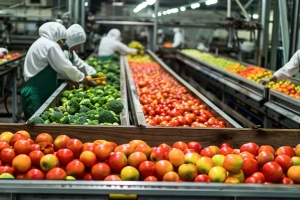
This course equips participants with the knowledge and practical skills required to ensure health, safety, and hygiene standards in agricultural and farm environments. It focuses on risk identification, accident prevention, hygiene practices, safe handling of chemicals and equipment, and workplace safety systems. Participants will learn how to create safe working environments, reduce health risks, and ensure compliance with safety standards in agricultural operations.
Target Groups
- Farmers and farm workers
- Agribusiness managers and supervisors
- Agricultural extension officers
- Processing and storage facility workers
- NGO and rural development practitioners
- Students pursuing agriculture, food safety, or environmental health
Course Objectives
By the end of this course, participants will be able to:
- Understand principles of health, safety, and hygiene management.
- Identify workplace hazards in agricultural environments.
- Apply effective safety practices in farm operations.
- Implement hygiene standards in production and handling systems.
- Handle agrochemicals and equipment safely.
- Prevent accidents and occupational health risks.
- Develop farm safety policies and procedures.
- Respond effectively to emergencies and incidents.
- Promote a culture of safety and hygiene compliance.
- Improve overall farm worker health and productivity.
Course Modules
Module 1: Introduction to Health, Safety & Hygiene in Agriculture
- Importance of safety and hygiene in farming
- Overview of occupational health in agriculture
- Common risks in agricultural environments
- Legal and regulatory safety requirements
- Safety culture in farm operations
Module 2: Workplace Hazard Identification & Risk Assessment
- Types of agricultural hazards
- Risk identification techniques
- Risk assessment and evaluation methods
- Preventive and corrective measures
- Safety inspection procedures
Module 3: Farm Equipment & Machinery Safety
- Safe operation of farm machinery
- Equipment handling and maintenance safety
- Preventing mechanical accidents
- Operator safety training
- Emergency shutdown procedures
Module 4: Chemical Safety & Agrochemical Handling
- Safe use of fertilizers and pesticides
- Chemical storage and labeling
- Personal protective equipment (PPE) use
- Exposure prevention and first aid
- Disposal of hazardous materials
Module 5: Farm Hygiene & Sanitation Practices
- Importance of hygiene in agriculture
- Clean water and sanitation management
- Waste disposal systems
- Livestock and crop hygiene practices
- Preventing contamination and disease spread
Module 6: Occupational Health & Worker Safety
- Common occupational health issues in agriculture
- Heat stress, injuries, and fatigue management
- Ergonomics in farm work
- Health monitoring and medical support
- Worker safety awareness and training
Module 7: Emergency Preparedness & Response
- Emergency planning in farm environments
- Fire safety and prevention
- Accident response procedures
- First aid basics for farm workers
- Crisis management systems
Module 8: Food Safety & Post-Harvest Hygiene
- Hygiene in food handling and processing
- Preventing contamination in storage systems
- Safe packaging and transportation
- Food safety standards compliance
- Quality assurance practices
Module 9: Safety Policies & Compliance Systems
- Developing farm safety policies
- Regulatory compliance requirements
- Safety audits and inspections
- Record keeping for safety management
- Continuous safety improvement systems
Module 10: Capstone Project & Case Studies
- Real-world farm safety scenarios
- Group project: developing a farm safety and hygiene plan
- Hazard identification and risk control strategies
- Presentation of safety improvement plans
- Best practices and emerging trends in agricultural health and safety management