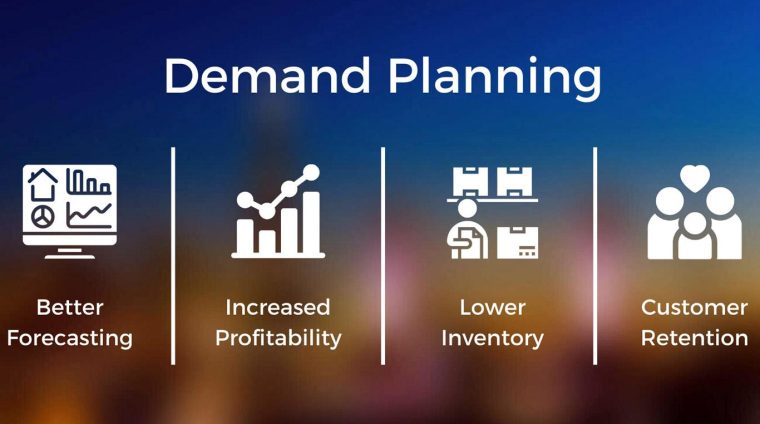
This course equips participants with the knowledge and practical skills required to accurately plan demand and effectively control inventory within supply chain systems. It focuses on demand forecasting, stock optimization, inventory policies, replenishment strategies, and data-driven decision-making. Participants will learn how to balance supply and demand, reduce stockouts and overstocking, and improve overall operational efficiency.
Target Groups
- Supply chain managers and officers
- Inventory and stock control specialists
- Demand planners and analysts
- Procurement and purchasing professionals
- Warehouse and logistics managers
- Production planners
- Retail and distribution managers
- Students pursuing supply chain management, logistics, or business administration
Course Objectives
By the end of this course, participants will be able to:
- Understand principles of demand planning and inventory control
- Develop accurate demand forecasts
- Optimize inventory levels and reduce carrying costs
- Implement effective replenishment strategies
- Improve stock accuracy and availability
- Reduce stockouts and excess inventory
- Use data and analytics for planning decisions
- Align inventory with demand variability
- Strengthen supply chain responsiveness
- Improve overall operational efficiency
Course Modules
Module 1: Introduction to Demand Planning and Inventory Control
- Definition and importance of demand planning
- Role of inventory control in supply chains
- Relationship between demand and supply
- Key inventory performance indicators
- Overview of planning frameworks
Module 2: Demand Forecasting Techniques
- Qualitative forecasting methods
- Quantitative forecasting methods
- Time series forecasting
- Causal forecasting models
- Forecast accuracy and error measurement
Module 3: Inventory Management Fundamentals
- Types of inventory (raw materials, WIP, finished goods)
- Inventory classification systems
- Inventory costs and trade-offs
- Stock turnover and efficiency metrics
- Inventory lifecycle management
Module 4: Inventory Control Systems
- Continuous vs periodic inventory systems
- Reorder point and reorder quantity models
- Safety stock calculation
- Economic order quantity (EOQ)
- Stock level optimization techniques
Module 5: Demand and Supply Balancing
- Matching supply with demand
- Managing variability and uncertainty
- Demand smoothing techniques
- Capacity planning alignment
- Supply chain coordination
Module 6: Inventory Planning and Replenishment
- Replenishment strategies and policies
- Vendor-managed inventory (VMI)
- Just-in-time (JIT) inventory systems
- Lead time management
- Stock allocation strategies
Module 7: Inventory Data and Analytics
- Data collection and inventory tracking
- Use of ERP and inventory systems
- KPI dashboards and reporting
- Data-driven decision-making
- Forecasting tools and software
Module 8: Warehouse and Inventory Integration
- Role of warehousing in inventory control
- Stock handling and storage optimization
- Inventory accuracy and cycle counting
- Loss prevention and shrinkage control
- Coordination between warehouse and planning
Module 9: Risk Management in Inventory Planning
- Risks in demand and supply fluctuations
- Stockout and overstock risks
- Supply chain disruptions
- Contingency planning strategies
- Building inventory resilience
Module 10: Capstone Project and Case Studies
- Real-world demand planning scenarios
- Group project: designing an inventory control system
- Forecasting and replenishment simulation exercise
- Case study review of inventory optimization success and failure
- Emerging trends in AI-driven demand forecasting, predictive inventory systems, and intelligent supply chain automation