



Start Now

+254722784250
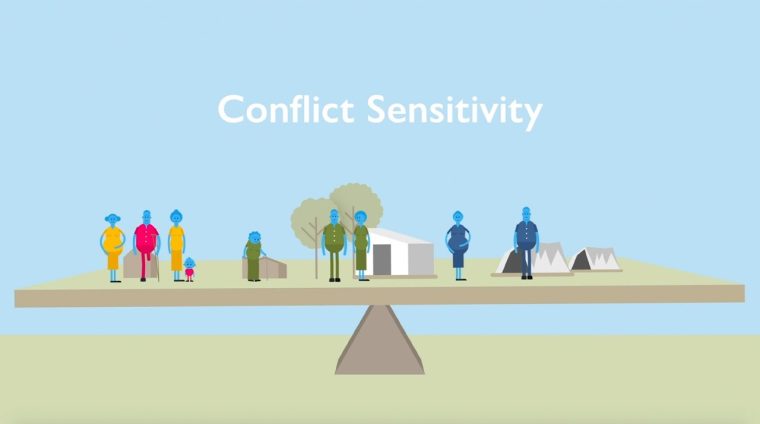
This course equips participants with the knowledge and practical skills required to design and implement humanitarian and development interventions that do not exacerbate conflict and instead contribute to peacebuilding and social cohesion. It focuses on conflict analysis, Do No Harm principles, risk assessment, stakeholder dynamics, program adaptation, and peace-sensitive programming. Participants will learn how to operate effectively in complex and fragile environments while minimizing unintended negative impacts.
By the end of this course, participants will be able to:
Module 1: Introduction to Conflict Sensitivity
Module 2: Conflict Analysis Tools and Methods
Module 3: Understanding Context and Risk Factors
Module 4: Do No Harm Framework in Practice
Module 5: Conflict-Sensitive Program Design
Module 6: Stakeholder Engagement in Conflict Contexts
Module 7: Risk Management and Mitigation Strategies
Module 8: Monitoring, Evaluation, and Learning in Conflict Settings
Module 9: Peacebuilding and Social Cohesion Integration
Module 10: Capstone Project and Case Studies
We use cookies to improve your experience, including essential cookies required for the website to function. By continuing, you agree to our use of cookies.
We use cookies to help you navigate efficiently and perform certain functions. You will find detailed information about all cookies under each consent category below.
Necessary cookies are required to enable the basic features of this site, such as providing secure log-in or adjusting your consent preferences. These cookies do not store any personally identifiable data.
Analytical cookies are used to understand how visitors interact with the website. These cookies help provide information on metrics such as the number of visitors, bounce rate, traffic source, etc.
Advertisement cookies are used to provide visitors with customised advertisements based on the pages you visited previously and to analyse the effectiveness of the ad campaigns.
Functional cookies help perform certain functionalities like sharing the content of the website on social media platforms, collecting feedback, and other third-party features.
We use cookies to improve your experience, including essential cookies required for the website to function. By continuing, you agree to our use of cookies.
We use cookies to help you navigate efficiently and perform certain functions. You will find detailed information about all cookies under each consent category below.
Necessary cookies are required to enable the basic features of this site, such as providing secure log-in or adjusting your consent preferences. These cookies do not store any personally identifiable data.
Analytical cookies are used to understand how visitors interact with the website. These cookies help provide information on metrics such as the number of visitors, bounce rate, traffic source, etc.
Advertisement cookies are used to provide visitors with customised advertisements based on the pages you visited previously and to analyse the effectiveness of the ad campaigns.
Functional cookies help perform certain functionalities like sharing the content of the website on social media platforms, collecting feedback, and other third-party features.