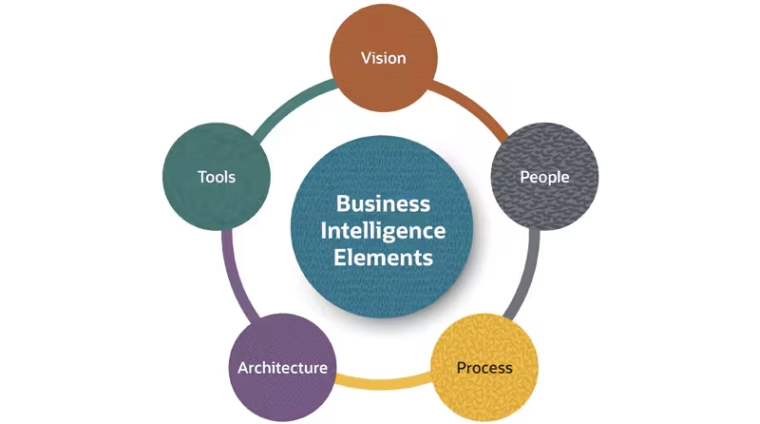
This course equips participants with the knowledge and practical skills required to design, implement, and manage a comprehensive Business Intelligence (BI) strategy and roadmap. It focuses on aligning BI initiatives with business goals, defining data-driven strategies, building governance structures, and planning scalable BI ecosystems. Participants will learn how to develop a clear BI vision, prioritize initiatives, and create a roadmap that supports long-term organizational success.
Target Groups
- Business intelligence managers and analysts
- Data strategy and governance professionals
- IT managers and data architects
- Business executives and decision-makers
- Project and program managers
- Students pursuing data analytics, IT, or business management
Course Objectives
By the end of this course, participants will be able to:
- Understand principles of BI strategy and planning.
- Align BI initiatives with organizational goals.
- Develop a BI vision and strategic framework.
- Identify and prioritize BI use cases.
- Design BI architecture and governance models.
- Create a BI implementation roadmap.
- Manage BI investments and resources effectively.
- Measure BI success and performance.
- Improve decision-making through structured BI systems.
- Support long-term data-driven transformation.
Course Modules
Module 1: Introduction to BI Strategy & Roadmapping
- Definition and importance of BI strategy
- Role of BI in organizational success
- Strategic vs operational BI
- BI maturity models
- Case studies in BI strategy implementation
Module 2: Business Alignment & Requirements Analysis
- Understanding business objectives
- Translating business needs into BI requirements
- Stakeholder analysis and engagement
- Identifying key decision areas
- Prioritizing BI opportunities
Module 3: BI Vision & Strategic Framework Development
- Defining BI vision and goals
- Establishing strategic BI principles
- Building a data-driven culture
- Aligning BI with digital transformation
- Success factors in BI strategy
Module 4: BI Architecture & Ecosystem Design
- Overview of BI architecture components
- Data warehouses, data lakes, and analytics layers
- Tool and platform selection
- Integration of BI systems
- Scalability and flexibility considerations
Module 5: Data Governance & Management Strategy
- Data governance frameworks
- Data quality and standards
- Master data management principles
- Metadata and data cataloging
- Compliance and regulatory considerations
Module 6: BI Use Case Identification & Prioritization
- Identifying high-value BI use cases
- Business impact vs complexity analysis
- ROI evaluation for BI initiatives
- Prioritization frameworks
- Creating BI value propositions
Module 7: BI Roadmap Development
- Structuring a BI roadmap
- Short-term vs long-term planning
- Phased BI implementation approach
- Milestones and deliverables
- Risk management in BI planning
Module 8: BI Performance Measurement & KPIs
- Defining BI success metrics
- Tracking adoption and usage
- Measuring business impact
- Dashboarding BI performance
- Continuous improvement frameworks
Module 9: BI Implementation & Change Management
- Executing BI strategy plans
- Managing organizational change
- Stakeholder communication strategies
- Training and user adoption
- Overcoming resistance to BI systems
Module 10: Capstone Project & Case Studies
- Real-world BI strategy scenarios
- Group project: developing a complete BI roadmap
- Strategic BI planning exercise
- Presentation of BI strategy proposals
- Emerging trends in BI strategy and enterprise analytics ecosystems