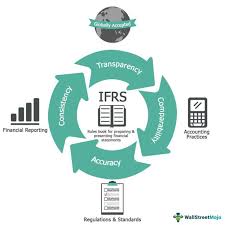
This course provides participants with a comprehensive understanding of International Financial Reporting Standards (IFRS) and their application in organizational financial reporting. It covers IFRS principles, compliance requirements, reporting frameworks, and the preparation of financial statements in accordance with global accounting standards. Participants will learn how to ensure accurate, transparent, and compliant financial reporting that supports informed decision-making.
Target Groups
- Finance and accounting professionals
- Internal auditors and compliance officers
- Corporate controllers and reporting managers
- CFOs and financial analysts
- Accountants preparing financial statements under IFRS
- Students pursuing finance, accounting, or auditing careers
- Professionals involved in corporate governance and financial oversight
Course Objectives
By the end of this course, participants will be able to:
- Understand the key principles and framework of IFRS.
- Apply IFRS standards in the preparation of financial statements.
- Ensure compliance with regulatory and reporting requirements.
- Analyze and interpret IFRS-compliant financial reports.
- Identify differences between IFRS and local accounting standards.
- Implement internal controls to ensure accurate reporting.
- Prepare disclosures and notes in accordance with IFRS.
- Assess the impact of IFRS on business performance and strategy.
- Integrate IFRS reporting into organizational governance frameworks.
- Apply best practices for transparent and reliable financial reporting.
Course Modules
Module 1: Introduction to IFRS
- Overview of IFRS framework and objectives
- Benefits and challenges of adopting IFRS
- IFRS vs. local accounting standards
- Key principles of recognition, measurement, and disclosure
Module 2: Financial Statement Preparation under IFRS
- Statement of financial position and income statement
- Statement of cash flows and changes in equity
- Presentation requirements and formats
- Common adjustments and reconciliations
Module 3: IFRS for Assets
- Accounting for property, plant, and equipment
- Intangible assets and amortization
- Investment property and fair value measurement
- Impairment testing and revaluation
Module 4: IFRS for Liabilities and Provisions
- Recognition of financial and non-financial liabilities
- Provisions, contingent liabilities, and contingencies
- Leases and lease obligations under IFRS 16
- Accounting for employee benefits and pensions
Module 5: Revenue and Contract Accounting (IFRS 15)
- Revenue recognition principles
- Identifying performance obligations
- Measuring and allocating transaction prices
- Disclosure requirements for revenue reporting
Module 6: Financial Instruments and IFRS 9
- Classification and measurement of financial assets and liabilities
- Impairment and expected credit loss model
- Hedging and derivatives accounting
- Disclosures and reporting requirements
Module 7: IFRS Compliance and Governance
- Regulatory requirements and audit considerations
- Internal controls to ensure compliance
- Risk management in financial reporting
- Ethics and professional standards in reporting
Module 8: Consolidation and Group Reporting
- Principles of consolidation and subsidiary accounting
- Accounting for associates and joint ventures
- Preparation of consolidated financial statements
- Intercompany eliminations and disclosures
Module 9: IFRS Disclosures and Notes
- Preparing comprehensive notes to financial statements
- Significant accounting policies and estimates
- Segment reporting and related party disclosures
- Transparency and clarity in financial reporting
Module 10: Practical Applications and Case Studies
- Real-world examples of IFRS adoption
- Challenges in implementing IFRS in organizations
- Exercises in preparing IFRS-compliant statements
- Best practices and lessons learned from IFRS reporting